Saudi Arabia is experiencing rapid urban development, with new residential communities, commercial buildings, industrial facilities, infrastructure projects, and major redevelopment initiatives emerging across the Kingdom. As older structures make way for new developments, the demand for professional demolition contractors in Saudi Arabia continues to grow.
Demolition is much more than simply tearing down a building. It requires careful planning, structural assessment, specialized equipment, experienced workers, safety procedures, waste management, and compliance with applicable regulations.
Whether you are removing an old villa in Riyadh, preparing a commercial property for redevelopment, or dismantling an industrial structure, choosing the right demolition contractor can make a significant difference to the safety, cost, and timeline of your project.
What Do Demolition Contractors in Saudi Arabia Do?
Professional demolition contractors are responsible for planning and executing the controlled removal of buildings, structures, concrete elements, and other construction components.
Depending on the project, demolition contractors may provide services such as:
- Complete building demolition
- Partial structural demolition
- Concrete demolition
- Commercial property demolition
- Residential demolition
- Industrial demolition
- Interior demolition
- Structural dismantling
- Concrete cutting and breaking
- Site clearance
- Debris removal
- Construction and demolition waste management
A professional contractor assesses the structure and surrounding environment before selecting the safest and most efficient demolition method.
Why Professional Demolition Services Are Important
Demolition projects can involve significant risks. Uncontrolled demolition can damage neighboring properties, underground utilities, roads, equipment, or existing structures.
Professional demolition companies in Saudi Arabia use systematic procedures to reduce these risks.
1. Safety Comes First
Safety should be the highest priority during any demolition project.
Experienced contractors establish appropriate site controls, identify potential hazards, use suitable personal protective equipment, and follow planned demolition procedures.
A proper demolition plan can help protect workers, nearby buildings, pedestrians, equipment, and the surrounding environment.
2. Proper Project Planning
Every structure is different. Before demolition begins, contractors need to understand the building’s construction, structural elements, surrounding properties, access restrictions, and potential hazards.
The demolition method can then be selected according to the characteristics of the project.
3. Specialized Equipment
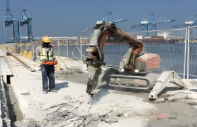
Large demolition projects often require heavy machinery and specialized tools.
Depending on the structure, contractors may use:
- Excavators
- Hydraulic breakers
- Concrete crushers
- Cutting equipment
- Diamond saws
- Core drilling equipment
- Loaders
- Heavy-duty transportation equipment
Using the right equipment can improve productivity while helping maintain greater control over the demolition process.
Types of Demolition Services in Saudi Arabia
Building Demolition
Building demolition involves the controlled removal of an entire structure.
This may be required when an old building is structurally unsuitable, a property is being redeveloped, or a site needs to be cleared for a new construction project.
Professional building demolition contractors in Saudi Arabia plan the demolition sequence carefully to minimize risks and unnecessary disruption.
Commercial Demolition
Commercial demolition is commonly required for offices, retail buildings, warehouses, hotels, restaurants, and other commercial properties.
These projects may involve complete demolition or selective removal of specific sections of a property.
Residential Demolition
Residential demolition can include villas, houses, apartment buildings, and other residential structures.
Because residential properties are often located close to neighboring buildings, roads, and utilities, controlled demolition and careful site management are particularly important.
Industrial Demolition
Industrial demolition can be more complex because facilities may contain heavy structures, machinery, reinforced concrete, steel components, tanks, pipelines, and other specialized installations.
Industrial projects require detailed planning and appropriate equipment to dismantle structures safely and efficiently.
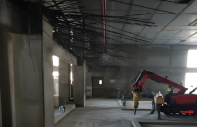
Selective Demolition
Selective demolition involves removing specific portions of a building while preserving other sections.
For example, a contractor may remove:
- Concrete walls
- Floors
- Ceilings
- Structural sections
- Interior partitions
- Staircases
- Concrete slabs
Selective demolition is often useful when a building is being renovated or partially redesigned.
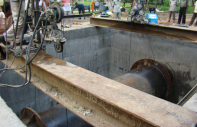
Demolition and Concrete Cutting
In many projects, demolition works are closely connected with concrete cutting services.
Concrete cutting can provide a more controlled way to remove specific structural or non-structural elements.
Common techniques include:
- Wall sawing
- Floor sawing
- Wire sawing
- Core drilling
- Concrete breaking
- Controlled concrete removal
These methods can be particularly useful when precision is required or when conventional heavy demolition could create unnecessary vibration or damage.
Demolition Regulations and Waste Management in Saudi Arabia
Demolition contractors must consider applicable Saudi regulations and permitting requirements before starting work.
For example, demolition permits can be obtained electronically through the Balady platform, and the process involves selecting the relevant building permit or survey decision and contracting with an engineering office.
Waste management is also an important part of demolition projects. Saudi authorities have established requirements covering the disposal of construction, demolition, and renovation waste. These requirements address materials such as concrete, rubble, bricks, iron, plastics, and hazardous materials and require appropriate disposal arrangements.
Current technical guidance also emphasizes construction and demolition waste management plans, source segregation, reuse and recycling where appropriate, and the use of licensed providers for waste collection, transportation, treatment, and disposal.
This makes responsible waste handling an important consideration when selecting a demolition contractor.
How to Choose the Best Demolition Contractor in Saudi Arabia
Selecting a demolition contractor should not be based only on the lowest quotation. Consider the contractor’s experience, capabilities, safety procedures, equipment, project planning, and waste management practices.
Check Previous Experience
Look for contractors with experience handling projects similar to yours.
A contractor experienced in residential demolition may not necessarily have the equipment and expertise required for a large industrial demolition project.
Review Safety Procedures
Ask how the contractor manages:
- Site safety
- Structural risks
- Dust and debris
- Equipment movement
- Nearby properties
- Workers and pedestrians
- Emergency situations
A professional contractor should be able to explain its safety and project-control procedures clearly.
Confirm Equipment and Capabilities
The contractor should have access to suitable machinery and demolition tools for the project.
The right equipment can improve efficiency and help achieve a more controlled demolition process.
Ask About Waste Disposal
Demolition produces large quantities of construction and demolition waste.
Ask how the contractor plans to segregate, transport, recycle, and dispose of materials generated during the project.
Consider Project Planning
A good contractor should provide a clear plan covering:
- Site assessment
- Demolition method
- Required permits
- Safety controls
- Equipment
- Work schedule
- Waste removal
- Site clearance
This can help reduce unexpected delays and costs.
Why Choose Experienced Demolition Contractors?
Working with an experienced demolition company can provide several advantages:
Improved safety: Professional planning helps reduce risks associated with structural demolition.
Better efficiency: Experienced teams know how to select appropriate methods and equipment.
Controlled demolition: Specialized techniques can help limit unnecessary damage and disruption.
Waste management: Proper segregation and disposal can help meet applicable requirements.
Project coordination: Experienced contractors can coordinate demolition, debris removal, equipment, and site preparation.
Demolition Services Across Saudi Arabia
Demand for professional demolition services is increasing across major Saudi cities and development areas.
Demolition Contractors in Riyadh
Riyadh’s continued commercial, residential, and infrastructure development creates demand for building demolition, concrete demolition, selective demolition, and site clearance services.
Demolition Contractors in Jeddah
Jeddah has a diverse mix of residential, commercial, industrial, and infrastructure properties, creating opportunities for both complete and selective demolition services.
Demolition Contractors in Dammam and the Eastern Province
Industrial and commercial development in the Eastern Province can require specialized demolition and dismantling services for industrial facilities, warehouses, concrete structures, and other properties.
Frequently Asked Questions
How much does demolition cost in Saudi Arabia?
The cost depends on several factors, including the size and type of structure, location, demolition method, accessibility, equipment requirements, structural complexity, waste volume, and project duration. A site assessment is normally required to provide an accurate quotation.
Do I need a demolition permit in Saudi Arabia?
Demolition permits may be required depending on the project and location. For example, Riyadh Municipality provides an electronic building demolition permit service through the Balady platform.
How long does a demolition project take?
The timeline depends on the building size, construction type, demolition method, site conditions, equipment, and waste-removal requirements. Smaller structures may be completed relatively quickly, while large commercial and industrial projects can take considerably longer.
What happens to demolition waste?
Demolition waste can include concrete, bricks, steel, rubble, plastics, and other materials. Depending on the material and applicable requirements, waste may be segregated for reuse or recycling and transported to authorized treatment or disposal facilities.
Can a building be partially demolished?
Yes. Selective or partial demolition can remove specific sections while preserving the remaining structure. This is commonly used during renovations, extensions, and building modifications.
Final Thoughts
Choosing the right demolition contractors in Saudi Arabia is an important decision for any redevelopment, renovation, construction, or site-clearance project.
A professional contractor should combine experienced personnel, appropriate equipment, detailed planning, strong safety practices, controlled demolition techniques, and responsible waste management.
Whether you require building demolition in Riyadh, commercial demolition, industrial dismantling, concrete demolition, or selective demolition, working with a qualified and experienced contractor can help keep the project safer, more efficient, and better organized.
If your project involves demolition in Saudi Arabia, start by evaluating the contractor’s experience, safety procedures, equipment, permits, waste-management capabilities, and previous projects before making your decision.